

What Are Swallows? A Beginner's Guide to Fufu, Pounded Yam, Bobolo and More
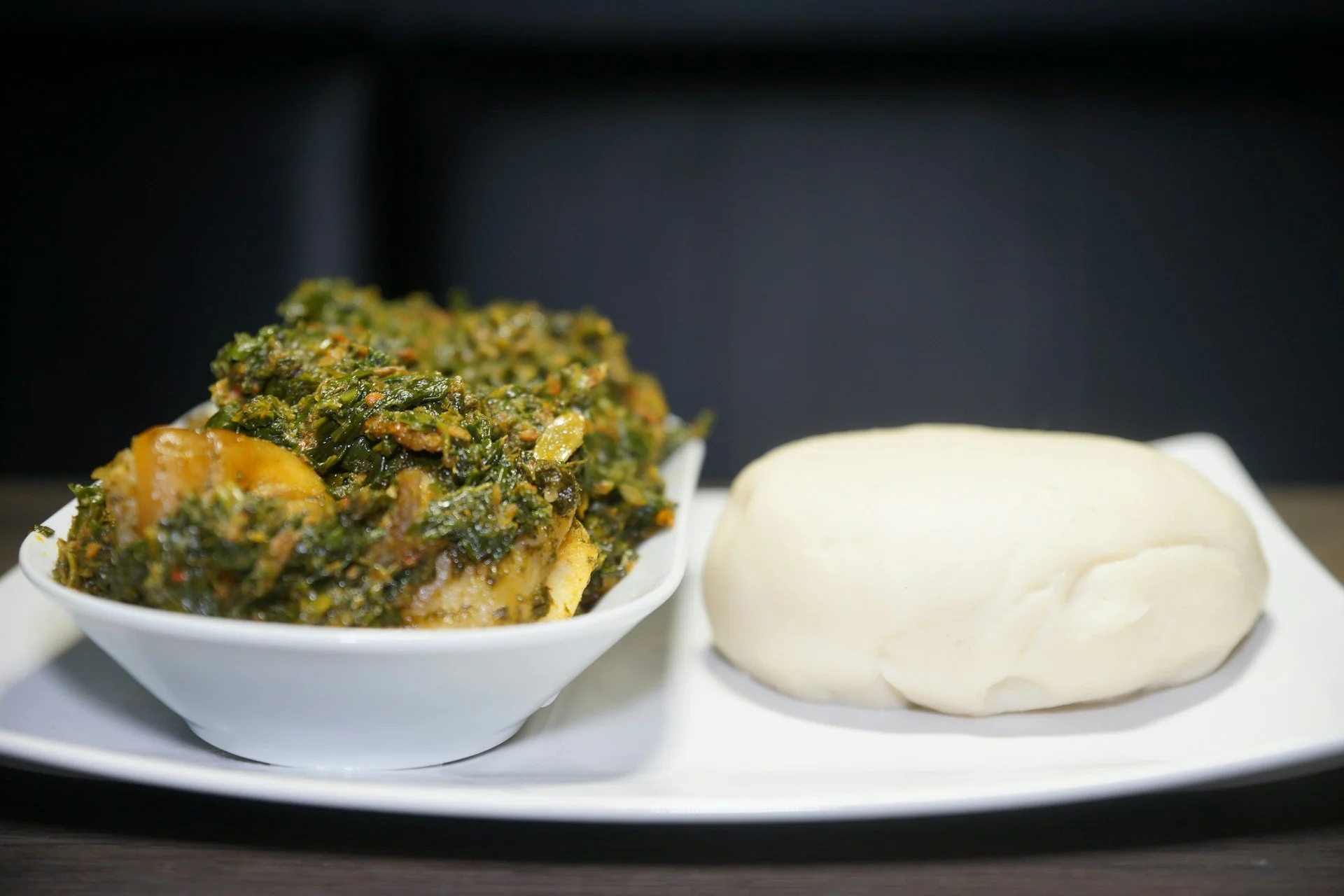
If you've been to one of our events or subscribe to our newsletter, you’ve probably come across the word “swallow”. And no, we’re not just telling you to eat!
For anyone unfamiliar with West and Central African cooking, it can be a bit hard to fathom as there’s not really a similar item in other popular cuisines.
Swallows are actually one of the most important parts of so many Cameroonian meals. They bring together rich, flavourful stews and soups in a way that's both comforting and filling. The result is completely different to eating with bread or rice.
Below, we’ll give you a bit more info, including how they're eaten and why they're such an important part of Cameroonian cuisine.
What is a swallow?
A swallow is a soft, dough-like starchy food that's served alongside soups and stews throughout West and Central Africa, including Cameroon. Similar staples are enjoyed in other parts of Africa too, but they're usually known by local names rather than being grouped together as "swallows".
The word "swallow" is mainly used in Nigerian English as a convenient way to group these foods together. Across Africa, people are much more likely to refer to each one by its own name, such as fufu, iyan (pounded yam), eba, banku or bobolo (more on these later).
It’s a bit like the way Brits refer to a “curry” when they're really referring to dozens of distinct dishes from the Indian subcontinent.
How to eat a swallow
Rather than using cutlery, a small piece is pinched off, rolled gently between your fingers and used to scoop up the accompanying dish. In this way, the swallow acts as both your utensil and your carbs, soaking up all those incredible flavours.
Traditionally, it's then swallowed rather than chewed – which is where the English term "swallow" comes from. Don’t worry if it’s your first time though, you can eat it however you see fit!
The most popular types of swallow
Although they're often grouped together, there isn't just one kind of swallow. Different regions use different staple crops depending on what's grown locally. They can be made from:
Cassava
Yam
Maize (corn)
Rice
Sorghum
Millet
Wheat
Potato
The exact ingredients, names and textures vary enormously from country to country, and even from one community to the next. That's one of the things we love most about African food: there isn't a single "correct" version.
Here are some of the most popular...
Fufu
Probably the best-known swallow outside Africa, fufu is made by boiling and pounding starchy vegetables until smooth and elastic.
Depending on where you are, it might be made from cassava, plantain, yam or a combination of ingredients. In Cameroon, it’s exclusively made from fermented cassava, but the Ghanaian and Ivorian varieties aren’t fermented and use other starchy veg.
Its light flavour and satisfyingly springy texture make it a brilliant accompaniment to soups and stews, as mentioned in our blog post 4 Popular Vegan West African Dishes You Must Try.
Pounded yam (Iyan)
Pounded yam is exactly what it sounds like: boiled yam that's traditionally pounded until it becomes silky smooth.
It's slightly richer than most cassava-based swallows and has a wonderfully soft, almost cloud-like texture. It's particularly popular in south-west Nigeria and is often served with soups such as egusi or efo riro.
Eba
Made from garri (granulated fermented cassava), eba has a firmer texture and a subtle tang from the fermentation process.
It's one of the most common everyday swallows across Nigeria, prized for being both satisfying and easy to prepare.
Bobolo
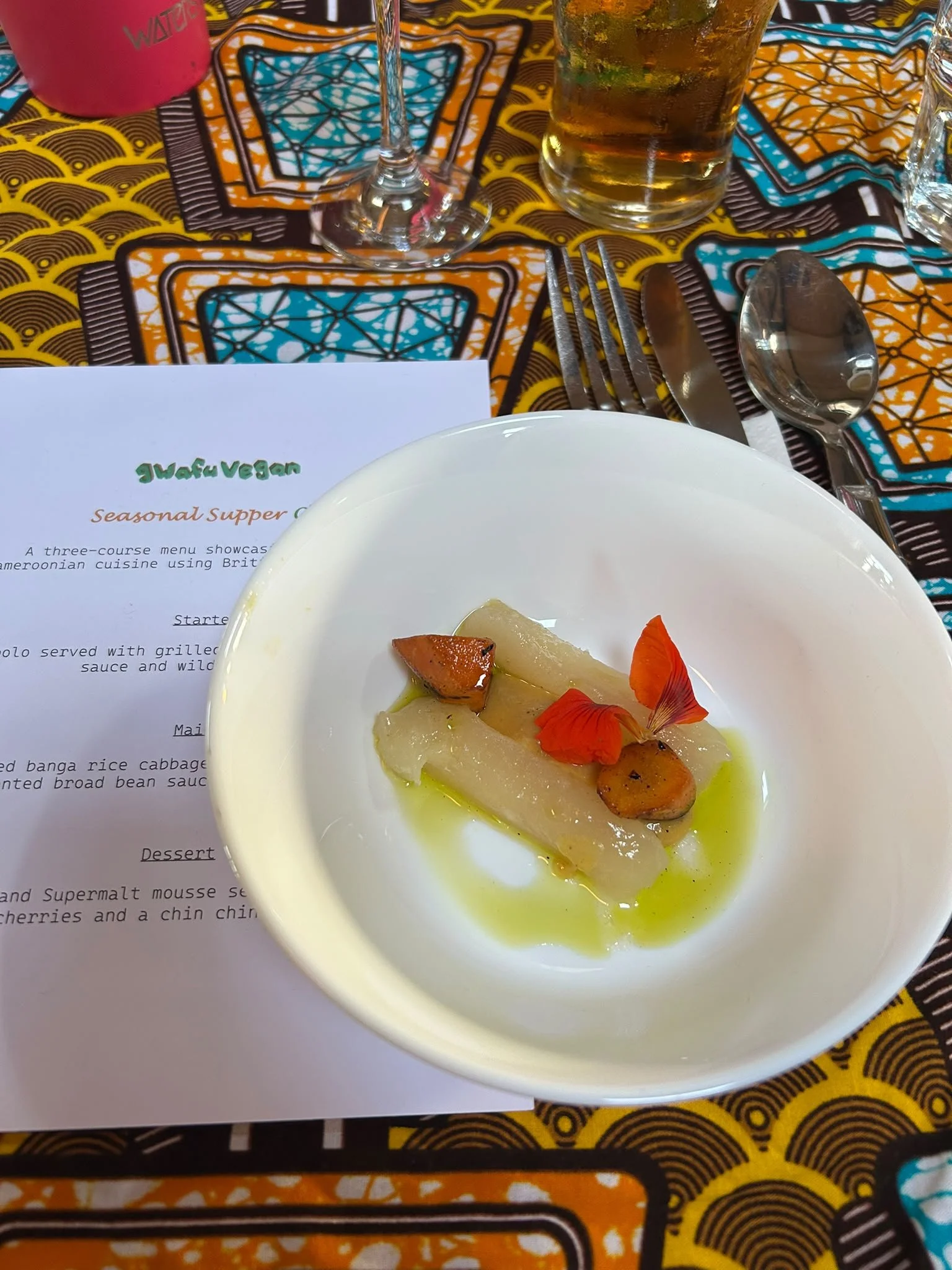
Bobolo is a traditional Central African swallow made from fermented cassava. After fermenting for several days, the cassava is ground into a paste, wrapped in leaves and steamed until firm.
The leaves aren't eaten, but they help give bobolo its distinctive aroma while keeping it moist during cooking.
Compared with fufu, bobolo is slightly denser with a gentle fermented flavour that pairs beautifully with rich sauces and slow-cooked dishes. It's especially popular in Cameroon, where it's a staple accompaniment to loads of family meals.
It’s also served as a Cameroonian street food snack with a sauce, which is how we included it in our 2026 supper club!
Which dishes are swallows served with?
Swallows are rarely eaten on their own in Cameroon. They're designed to accompany soups and stews that are rich enough to coat them.
Some classic pairings include:
Egusi soup
Efo riro
Tomato-based stews like Cornchaff
Bean stews
As vegan caterers in Manchester, we often pair our swallows with vibrant plant-based versions of traditional recipes, proving you don't need meat to enjoy authentic West African flavours.
Swallows vs rice vs bread
This comparison comes up a lot, as people like to have a reference point with foods they’re more familiar with.
Swallows offer a completely different eating experience compared to rice. Their soft, stretchy texture is perfect for scooping up rich soups and slow-cooked stews, allowing you to enjoy every last bit of sauce.
But unlike bread, they don't compete with the flavours of the dish. Most swallows have a fairly mild taste, making them the ideal partner for boldly seasoned recipes.
Think of them less as the star of the plate and more as the perfect vehicle for everything around them.
Will we be serving them?
Absolutely.
Swallows regularly appear on our catering menus and at our supper clubs because they're such an important part of Cameroon’s food culture.
They're also brilliant conversation starters. For most guests, it's their first experience of eating this way, and it's always a pleasure introducing people to something completely new.
If you'd like to discover more about West African food and the dishes we love serving, subscribe to our newsletter below. You’ll get recipes, food guides and behind-the-scenes updates, as well as being the first to know about our upcoming events.